
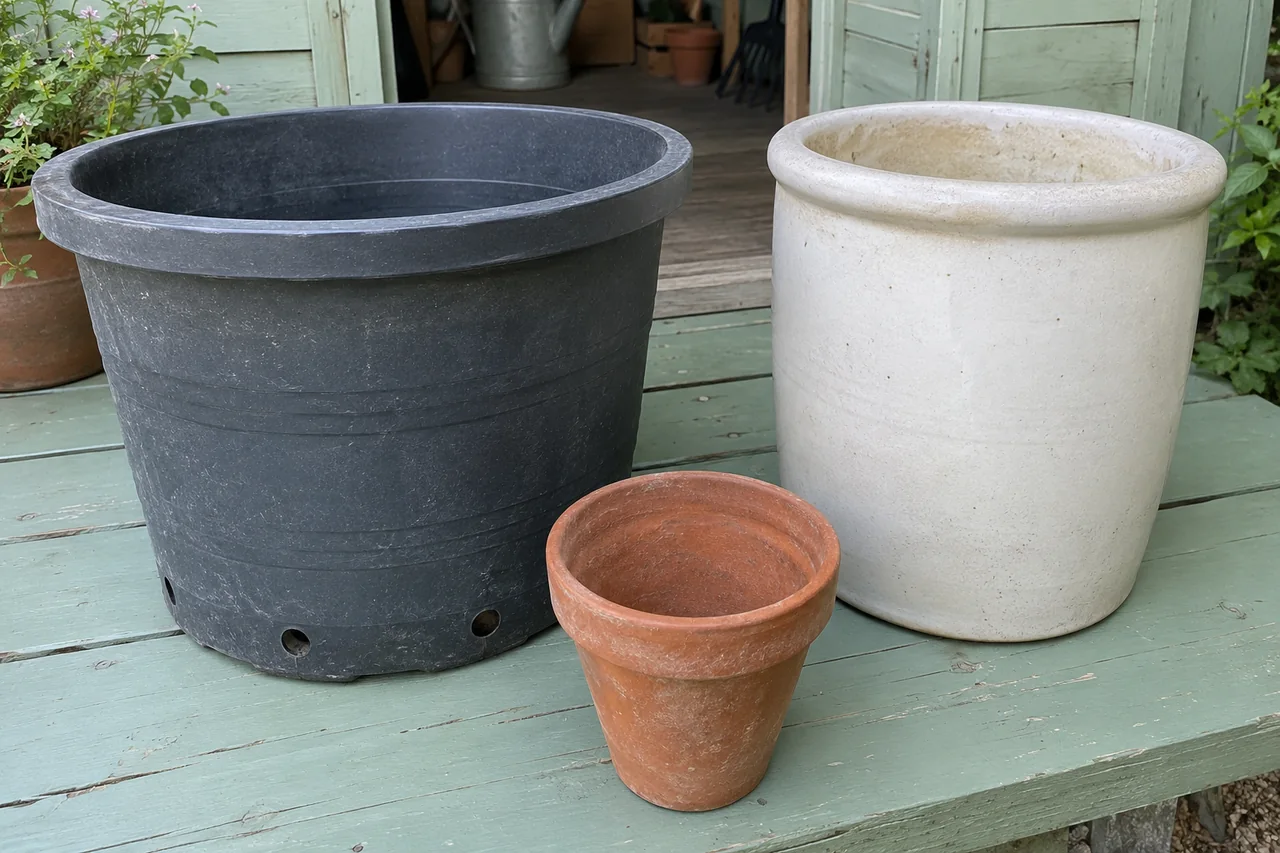
Choose the usable root space and drainage first. Then compare materials against how often you will move the pot, where it will stand and how much watering you can manage.
For a small garden, the right purchase is a container that works in its actual position. A handsome planter can become expensive to fill, awkward to carry or difficult to repot. Make a short specification before browsing, and check any sound pots you already own against it.
Write a brief for the pot
- Name the plant or display. A permanent shrub, one young herb and a seasonal group need different amounts of growing space.
- Measure the available position, including the route past the pot and the clearance for doors.
- Decide whether you must move it empty, seasonally or regularly. Include where it will spend winter.
- Set a budget for the container, suitable compost and any necessary support, rather than the pot alone.
If you have not chosen the planting yet, use the first-container planning guide before ordering a set of matching planters. It is easier to buy for a known job than to find plants for three containers that looked good together.
Which material suits that job
| Material | Useful when | Check before paying |
|---|---|---|
| Reusable plastic | Keeping the empty container light matters. | Sturdiness, sun-damage guidance, drainage and replacement or recycling options. |
| Terracotta | You want its appearance and can accommodate the weight. | Unglazed clay dries more quickly. Check the stated frost protection. |
| Metal | The finish suits a permanent position. | It heats and cools quickly; inspect corrosion guidance and any liner. |
| Wood | A trough shape suits the space. | Wood deteriorates over time. Check construction, drainage and care instructions. |
The horticultural trade-offs above follow RHS container guidance. Material alone cannot tell you the quality of a particular pot. Ask for the product’s outdoor-use instructions, empty weight and warranty conditions.[1]
For glazed ceramics and mixed-material planters, use the maker’s specification rather than assuming the surface finish tells you what is underneath. “Stone effect”, for example, describes an appearance. Look for the actual material and any care restrictions.
Compare usable space rather than rim diameter
Check the internal width and depth, not just the outer measurements. A thick wall, raised base or shallow removable liner can leave less growing space than the photograph suggests. If capacity is listed in litres, establish whether it describes the planting cavity, the outer shell or a water reservoir.
For a single specimen, start with the rootball and the plant’s own growing advice. The RHS advises a modest increase in pot size; excess unrooted compost can stay wet, especially when growth is slow. A mixed seasonal display is a different purchase.[4]
Photograph the nursery pot beside a ruler, and take its measurements shopping. Allow for the planting depth and watering space below the rim. Avoid choosing a numerical size from a generic “small garden” list when the plant requires something else.
Check the shape and the route home
For a long-term planting, favour an opening through which the rootball can eventually come out. The RHS warns that urns wider in the middle than at the neck make repotting difficult. Tall, narrow shapes also need particular care in windy positions.[1]
Think through delivery, steps and the final position. The empty weight is only part of the load once compost, water and the plant are added. Do not assume a decorative rim or handle is a lifting point. Ask whether the maker provides safe moving instructions, and plan help for a heavy container.
On a balcony, check the building’s rules and permitted loads before adding substantial planters. Choosing a light shell does not establish that the filled arrangement is suitable. Keep access clear and use the building’s approved guidance for anything fixed to a railing.
Read the drainage and winter details
Look underneath the container or ask for a base photograph. Outdoor planting needs functioning drainage outlets. A sealed decorative shell is a cover pot: an inner nursery pot can drain into it, but collected water still needs removing.[1]
If outlets must be opened or drilled, follow the manufacturer’s instructions and check the effect on its warranty. Confirm whether feet or a stand are necessary to keep them clear, and whether those items are supplied. For the care checks, see the pot-drainage guide.
For a pot staying outside, ask what “frost-resistant” or “frost-proof” means for that product, including drainage and care conditions. Keep the instructions and receipt. The container’s claim does not make a tender plant hardy; winter plant protection needs its own plan.[2]
Three purchase examples
A seasonal doorstep display that will be rearranged. Compare sturdy lightweight pots with enough usable depth for the planned plants. A manageable container and simple open shape are useful reasons to choose one over a heavier decorative model. Check that it fits beside the door when planted, not just when empty.
A shrub that will stay in place for several years. Choose its current pot size from the rootball and plant advice, then prioritise stability, access for repotting and clear outdoor-care instructions. A narrow-necked urn may be an awkward long-term choice even when its advertised capacity looks generous.
A sunny herb pot you can check regularly. Terracotta may suit your preference if you accept its weight and faster drying. If carrying or frequent watering is the main difficulty, compare a sturdy plastic alternative. Neither material removes the need to match the plant to the position.
Spend on the checks that matter
Reuse a sound container when it meets the brief. The RHS advises keeping existing plastic pots in use until the end of their useful life. Buying replacements solely to change material creates another purchase without necessarily solving a growing problem.[3]
Compare the total setup cost, including delivery and the amount of suitable peat-free compost you will actually need. Buy one pot first if you are unsure about the size or routine. A matching set, extra saucers or decorative stands can wait until there is a clear use for them.
- Confirm the plant and intended position.
- Check internal measurements, planting capacity and open drainage.
- Read outdoor-care and frost conditions.
- Plan delivery, movement and eventual repotting.
- Compare the complete setup cost, then order only what you need.
How this guide was prepared
This is an editorial buying guide based on published horticultural guidance. HandyGarden has not physically tested products for this article. The examples are illustrative, and no affiliate links are included.
Sources
- RHS Advice Team: Growing plants in containers.
- RHS Advice Team: Preventing winter damage.
- RHS: How to garden without plastic.
- RHS Advice Team: Overpotting.
Sources checked 7 October 2026. Check current product specifications, care instructions and seller terms before buying.
Leave a Reply