
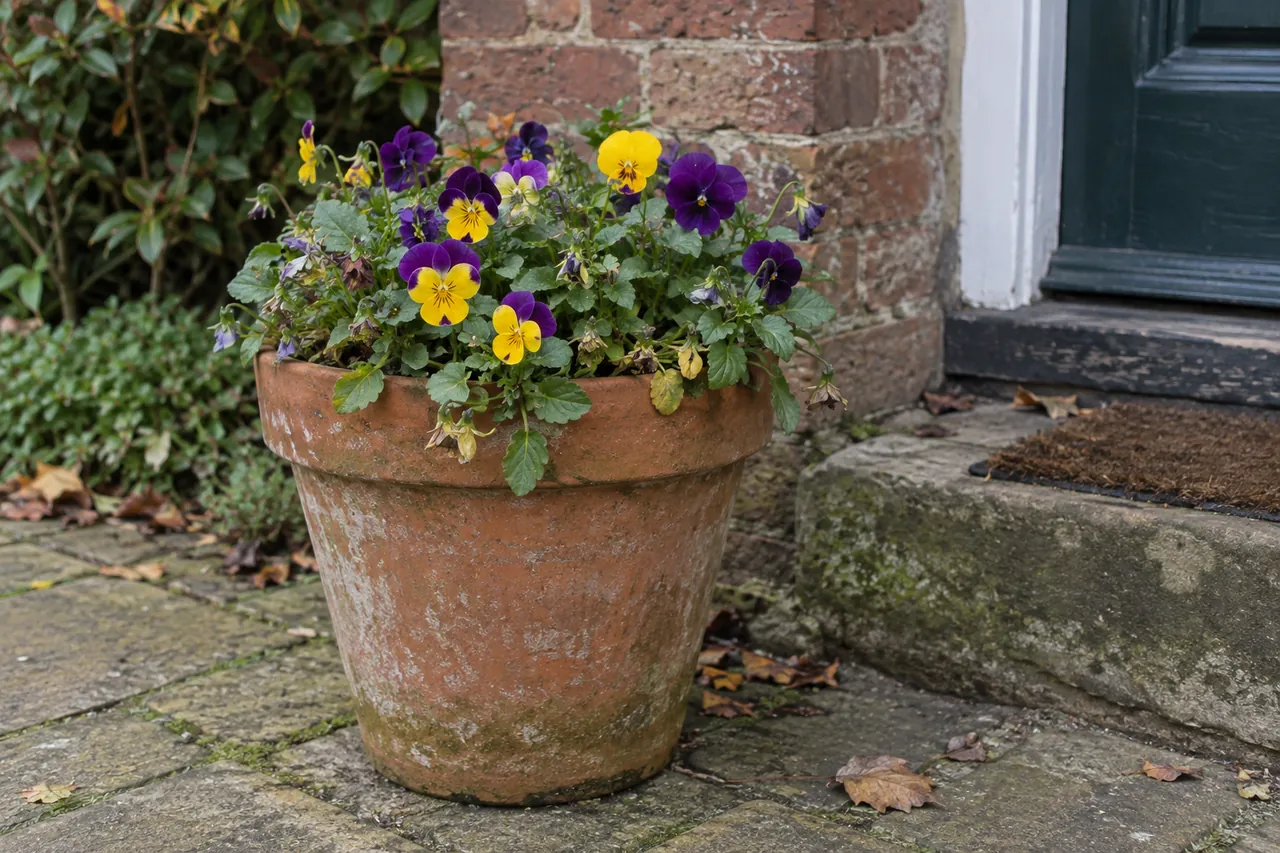
A winter pot sits close to the house, where you can see it on short days. Choose the position before the plants. A bright doorstep and a shaded corner will need different planting, even if the containers match.
Use plant labels to check the named variety’s size and hardiness, and arrange the nursery pots before buying the final container.
| Plan | Usable container size | Plants to gather |
|---|---|---|
| Bright flower pot | About 35cm wide ×35cm deep inside. | 5 established 9cm-pot winter-flowering violas, such as Sorbet XP Primrose Blotch, plus 7 Narcissus ‘Tête-à-tête’ bulbs. |
| Partial-shade foliage pot | About 45cm wide ×30cm deep inside. | 1 young common polypody (Polypodium vulgare) and 2 Heuchera ‘Obsidian’, in roughly 9–12cm nursery pots. |
| Sunny herb group | Two separate pots: rosemary at least 30cm wide ×30cm deep; thyme about 25cm wide ×25cm deep. | 1 established compact rosemary, such as Salvia rosmarinus ‘Roman Beauty’, and 1 established common thyme (Thymus vulgaris). |
These counts and sizes are working examples for seasonal displays, not RHS-tested combinations. Fit the actual nursery rootballs before filling: use a wider container or fewer plants if they are cramped. Choose pots with open drainage holes. The peat-free compost guide helps distinguish short-term display mixes from longer-term soil-based mixes.
The H codes below are RHS hardiness ratings: higher numbers indicate greater cold tolerance in UK growing conditions. They do not guarantee that roots in an exposed container are protected.
A flower pot for a bright position
Try winter-flowering violas above a layer of miniature daffodil bulbs. The violas may flower in mild winter spells; the daffodils are for spring. Choose the bulb variety for its flowering time rather than expecting both to open together.
Use a container deep enough for the bulbs at their recommended depth and the bedding roots above. For a layered display, start with a pot around 30cm across and deep, then check that the plants and planting depths fit. Keep space below the rim for watering.
For the 35cm example, use fresh peat-free multi-purpose compost; the RHS bulb-pot mix is three parts compost to one part horticultural grit. Arrange the five viola rootballs first, then check the seven bulb positions between them. Set bulbs to the depth on their packet and avoid pressing a rootball down onto a bulb. Leave the compost surface about 2cm below the rim, water to settle and let it drain.
Sorbet XP Primrose Blotch has pale-yellow flowers with dark centres; ‘Tête-à-tête’ adds yellow flowers in early spring. The RHS rates these plants H5 and H6 respectively, but a hardy plant’s roots can still freeze in a pot. After the daffodils flower, remove faded flower heads and move the whole pot somewhere suitable while the leaves die back naturally. Then replant suitable bulbs in a border or their own container, and move healthy violas when changing the display.
For a later winter display, Jenny Hendy combines ready-grown snowdrops, Cyclamen coum and small Iris reticulata. Her useful detail is to “plunge the bulbs, pot and all, into the soil and remove after flowering”, specifically the irises kept in nursery pots.[1] Use plants actually coming into flower at the time. Hardy C. coum is a different purchase from frost-tender miniature bedding cyclamen.
Treat Hendy’s combination as a temporary flowering display: the irises prefer sun, while the snowdrops and C. coum suit partial shade. After lifting an iris pot, keep its leaves growing in a suitable spot until they die down naturally.
Foliage for partial shade
Pair a suitable compact hardy fern with a heuchera chosen for its leaf colour. RHS winter suggestions include common polypody and soft shield fern; check the mature size before choosing either. Most heucheras prefer partial or dappled shade, and their leaves can provide interest when flowers are scarce.
Start with a roomy container and plants that fit comfortably in their nursery pots. A large fern needs more room than a small one. Plant the heuchera crown at its previous level, and avoid burying it in wet compost. This combination gives you foliage to enjoy through winter.
For the 45cm example, put the young polypody towards the back and the two ‘Obsidian’ heucheras towards the front. Use moisture-retentive but freely draining peat-free potting compost and water after planting. The fern is evergreen; ‘Obsidian’ is semi-evergreen, so cold may reduce its leaf display. Its glossy, near-black leaves provide the colour, rather than winter flowers.
Plan to separate these three plants in spring as growth resumes. Common polypody can eventually spread 0.5–1m, and each ‘Obsidian’ about 40cm: this is a winter arrangement of young plants, not their permanent shared home. RHS hardiness ratings are H7 for the fern and H6 for ‘Obsidian’; keep the pot protected during severe weather.
An edible group for a sunny, sheltered spot
Group established pots of rosemary and thyme rather than planting fresh, soft herbs into cold, wet compost. They share a preference for sun and free drainage, but keeping separate containers lets you give each rootball the room it needs.
Choose a compact rosemary variety for a small patio and retain its label. Thyme stays lower, so keep its pot where you can reach it for picking. Protect the group according to the forecast; these herbs still need attention in exposed or very cold conditions.
Use the two already-established pots in the table; avoid potting small new herbs into large cold containers for winter. A peat-free soil-based mix suits both, with horticultural grit mixed through, up to 25% by volume. ‘Roman Beauty’ is a compact culinary rosemary rated H4 by the RHS; common thyme is rated H5. Put the pair in sun and shelter, ideally where a wall reduces heavy rain, and use the winter herb plan for moisture and picking.
Keep the herbs as separate perennial pots in spring. Check for crowded roots once growth resumes and repot only when needed. Trim rosemary and thyme lightly at their appropriate after-flowering time; avoid a hard autumn cut.
Plan the spring move now
Winter plants grow little, so a sparse planting will not fill out quickly. Start with plants that already make a useful display, while leaving room for their rootballs. Check moisture in mild spells and keep the drainage clear; use the pot-protection checklist when severe cold or prolonged rain is forecast.
Decide where the perennials will live when the display changes. With a removable nursery pot, leave its drainage working and check both that pot and the surrounding mix. For the bulbs themselves, see spring bulbs in pots.
Keep ornamental bulbs separate from kitchen ingredients. Daffodils are harmful if eaten and can irritate skin, so wear gloves when handling them and keep bulbs where children and pets cannot eat them. Rosemary can also cause skin allergy in sensitive people.
Sources for these details
- Jenny Hendy, 30 Minute Gardening, Dorling Kindersley, 2012, pp. 24–25.