
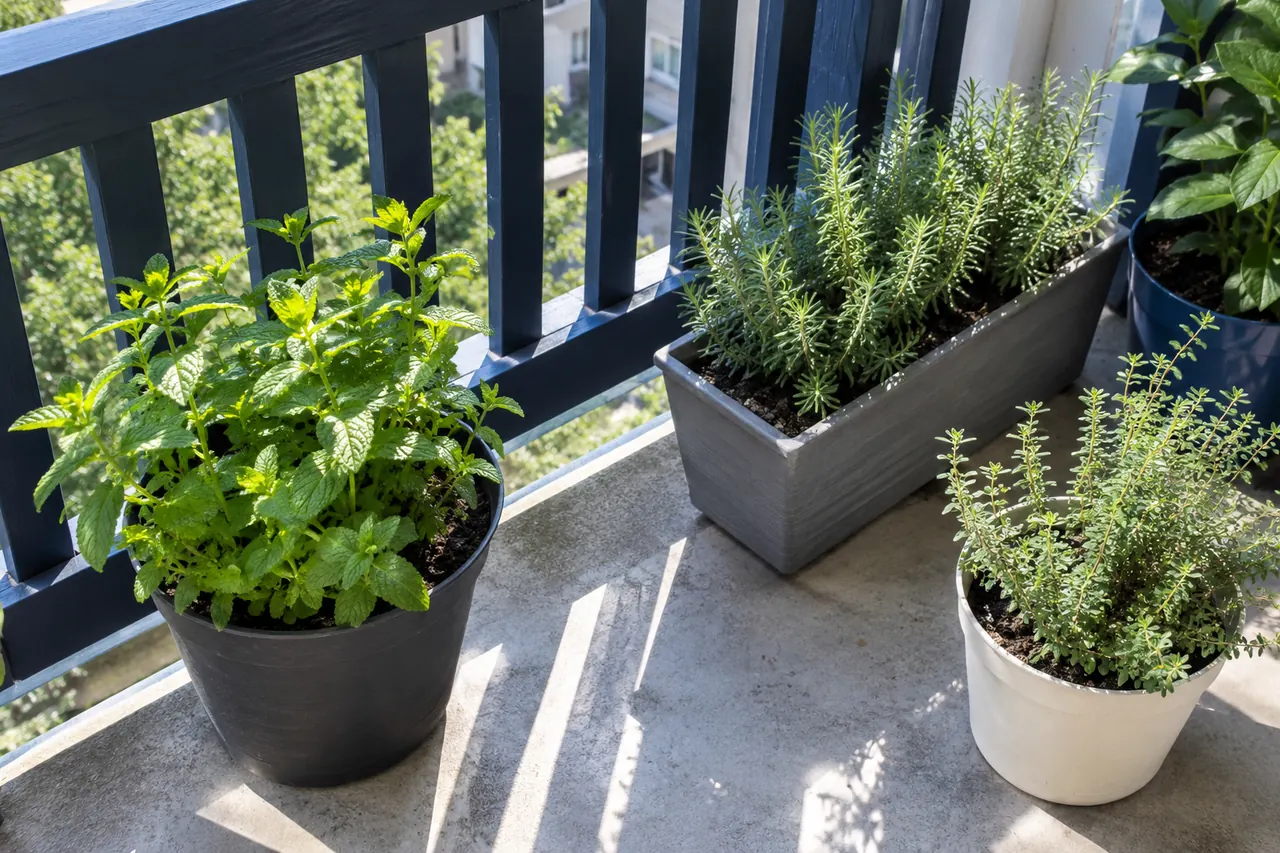
Look at the herbs you reach for when cooking. If you use mint every week and rarely use sage, let that decide your first purchase. A useful herb garden can be a few pots rather than a complete collection.
Keep different watering needs apart
| Herb and count | Position | Container and compost | Best starting time |
|---|---|---|---|
| 1 culinary mint, such as spearmint | Sun or partial shade; evenly moist compost. | An approximately 20–25cm-wide, 20cm-deep pot for a well-rooted young plant; peat-free multi-purpose or soil-based potting compost. | Spring or autumn; protect a new autumn planting from extremes. |
| 1 common thyme (Thymus vulgaris) | Warm sun, with free drainage. Choose a culinary type you like the smell of. | About 20cm wide and 15cm deep. RHS minimum for one thyme is 15cm wide × 10cm deep; peat-free soil-based compost with horticultural grit mixed in, up to 25% by volume. | Mid-spring to early summer gives the best establishment. |
| 1 rosemary (Salvia rosmarinus) | Sunny and sheltered; check the variety’s eventual size. | At least 30cm wide and deep for an established plant; peat-free soil-based compost with up to 25% horticultural grit mixed through. | Spring, when conditions are warming. |
Measure usable space inside the pot. The mint size and roomier thyme size are practical starting suggestions, not permanent limits. Match the container to the actual rootball: a tiny plug needs growing on in a smaller pot, not surrounding with a large volume of cold, wet compost. Buy correctly labelled culinary plants; a plant sold simply as “mint” may be a different species.
Mint grows strongly, so its separate pot does more than organise the display. It stops mint taking over a shared planting. Thyme and rosemary suit a different moisture routine; do not keep all the pots equally wet just because they sit together.
Choose plants you can look after now
Buy healthy plants with identifiable labels. Keep supermarket basil indoors in containers, following current RHS advice; its warmth and light needs are covered in the basil rescue guide. An established thyme plant and a soft pot of basil need different autumn plans.
In a small space, begin with separate pots and group them where they suit the light. You can change the layout as the plants grow. A rosemary that will become a sizeable shrub needs a plan beyond its first nursery pot.
Read the full plant name, too. Jenny Hendy distinguishes hardy wild marjoram, Origanum vulgare, from sweet marjoram, O. majorana, usually grown as an annual in Britain.[1] Two labels saying “marjoram” need not mean the same winter plan. If you later add another herb, check its identity before giving it the thyme pot’s routine.
Plant and label
- Use containers with open drainage holes and a potting mix suited to the herb. The peat-free compost guide explains bag labels and included feed. Mix horticultural grit through when the herb needs it; it is not a bottom drainage layer.
- Position each rootball at its previous growing level and fill gently around it, leaving a watering gap.
- Water after planting, then check moisture before the next watering. Keep labels where they remain readable.
Check moisture at the roots
Check each pot below the compost surface before watering; a dry-looking top is not enough. For a small pot, lift it as well so you learn the difference between a watered pot and a light, dry one. Check daily in warm, windy weather. Mint needs an evenly moist root zone; established thyme and rosemary can dry a little between waterings, but their containers still need water in dry spells.
When water is needed, apply it slowly to the compost and allow excess to escape. Do not add a fixed cupful to all three pots. If the mix is wet and water is not leaving, use the drainage checks before watering again.
Pick a little, check often
Harvest young growth without stripping the whole plant for one meal. Mint can need division and repotting as the roots crowd its container. Thyme’s new spring and summer growth has the best flavour, although it is evergreen. Rosemary in a pot needs winter attention in cold or wet locations.
A quick check while picking is a useful routine: look for moisture changes and damaged leaves, and check that the outlet is clear. Plan the winter destination while the pot is still easy to move. Use the winter plan for mint, thyme, rosemary and basil to choose its destination; some can stay outdoors with suitable protection.
Sources for these details
- Jenny Hendy, 30 Minute Gardening, Dorling Kindersley, 2012, pp. 120–121.