
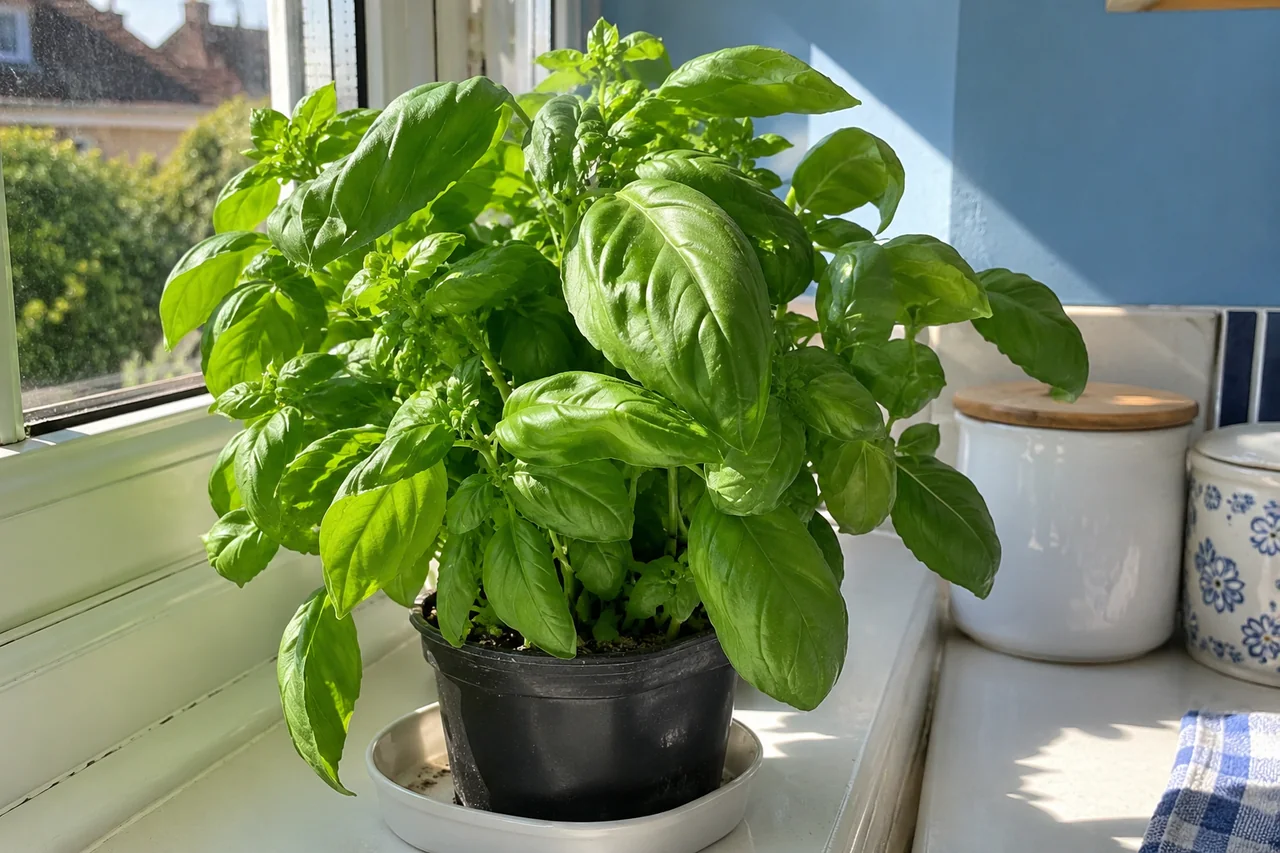
Count the stems at the base of a supermarket basil pot. As Alex Mitchell puts it, “supermarket herbs are actually many plants all squashed together in one pot”.[1] Crowding is one reason it may collapse after a week on the windowsill; cold or already damaged roots can make matters worse.
First, check the pot you bought
Remove the outer sleeve and look at the leaves, stems and compost. Choose a bright, warm place with a container that can drain. If the mix is already wet, do not give it an automatic drink because the leaves have drooped.
| What you find | First action |
|---|---|
| Crowded plants, firm stems and a rootball that holds together | Divide gently into rooted clumps; keep healthy roots with each section. |
| Dry, light pot and firm stems | Water the compost and let it drain before handling a stressed rootball. |
| Wet compost with soft, collapsing stem bases or badly rotten roots | Extra water and division are unlikely to repair that damage. Start with a healthier plant if little sound rooted growth remains. |
Basil needs warmth and good light. Keep this supermarket pot indoors, away from cold draughts. The RHS currently recommends growing supermarket-bought basil in indoor containers to reduce the risk of introducing pests or diseases outdoors.
Divide the crowd into smaller clumps
Alex Mitchell gives a useful rescue method in Gardening on a Shoestring: split one supermarket pot into about five rooted clumps. Each clump may still contain several seedlings. Keeping them together is a practical option when teasing out every stem would damage the roots.[1]
- Have small pots with drainage holes and fresh peat-free multi-purpose compost ready. Mitchell uses pots about 10cm across; adjust the size to the roots you have.
- Slide out the rootball. If the base is mushy or badly rotted, division is unlikely to rescue it.
- Ease the rootball into a few sections, keeping useful roots with each. Handle the roots and compost rather than tugging the stems.
- If shoots are very leggy, cut them back to a healthy pair of growing buds, as Mitchell suggests. Leave healthy foliage; a weak plant does not need stripping bare.
- Plant each clump at its previous level. Water gently to settle it, let excess water drain and return it to a warm, bright windowsill.
Water the roots, then let them breathe
Check the compost below the surface before watering again. Keep it moist without leaving the pots in a full saucer, and avoid wetting the foliage unnecessarily. Mitchell waters her newly divided plants from below. If you use a tray, lift the pots out once the mix has taken up water and let them drain; the tray is not their permanent home. If water cannot escape, follow the pot-drainage checks before the next drink.
In a dim winter window, growth and water use slow down. The book suggests division throughout the year, but that does not guarantee a useful winter harvest in a British kitchen.
Choose a bright windowsill that stays warm after dark, rather than letting leaves rest against a cold pane. In winter, check the mix before every watering and take fewer tips while growth is slow. Division gives the plant a better chance; it does not turn an ordinary supermarket pot into an endless year-round crop.
Pick tips, not every leaf
Once the plant is growing, harvest shoot tips regularly, cutting just above a healthy pair of leaves to encourage branching. Leave enough healthy foliage for it to keep growing. If you want leaves for cooking, remove flower stems as they appear.
After repotting, look for fresh shoots rather than measuring success by how many leaves you can take straight away. If this attempt fails, a healthy nursery plant or fresh sowing in spring gives you another starting point.
For the seasonal plan, see potted herbs in winter.
If basil is not a good fit for the light and warmth you can provide, the first group of herb pots offers mint, thyme and rosemary with their own outdoor care plans.
Sources for these details
- Alex Mitchell, Gardening on a Shoestring: 100 Fun Upcycled Garden Projects, Cool Springs Press, 2016, p. 104 (instructions), p. 105 (photograph).