
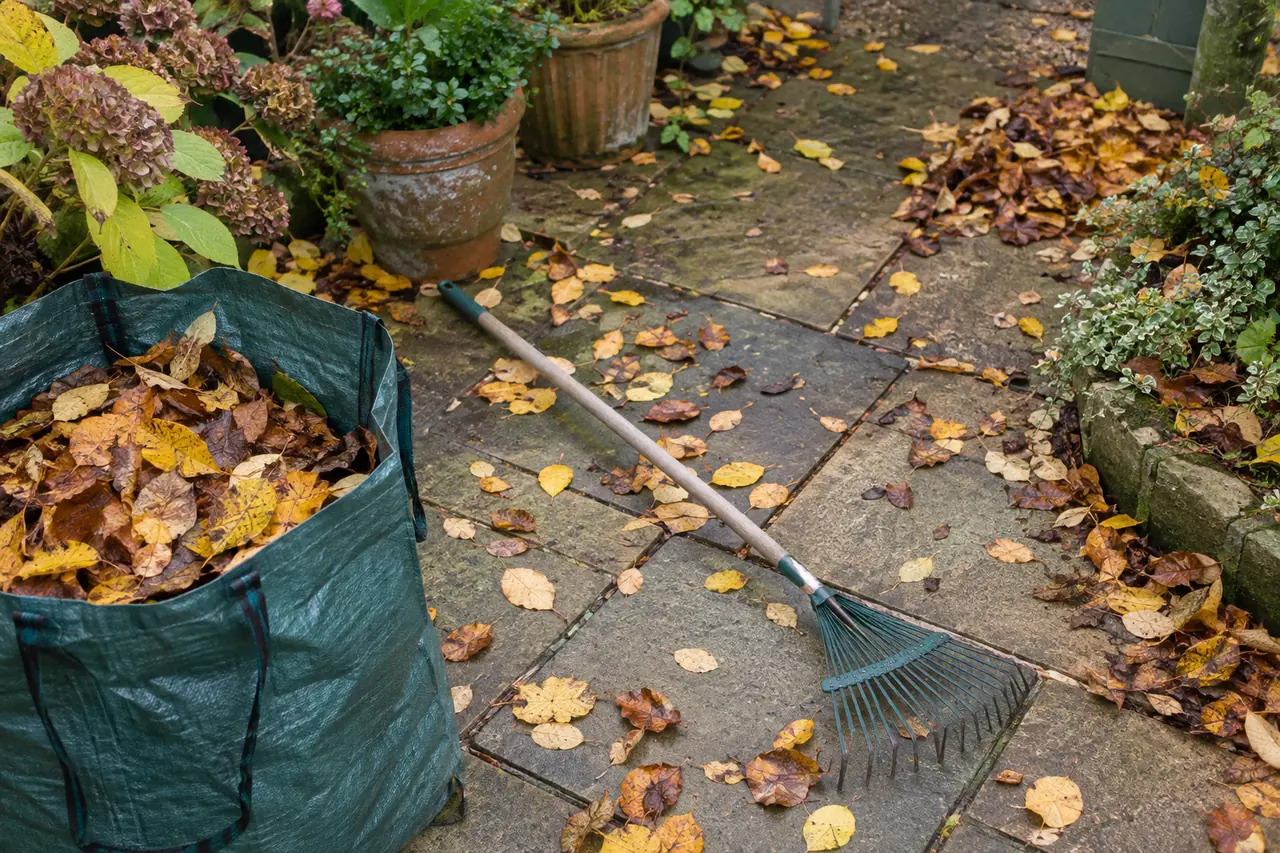
Start with the wet leaves on the path and the pots that hold water after rain. Those jobs are easier to do before cold weather arrives. If you have time left, look at bulb planting and the gaps left by summer bedding.
If you have twenty minutes
- Clear wet leaves from the route you walk and collect suitable leaves for leaf mould in bags. Keep a container or bag nearby so the next tidy-up has somewhere to go.
- Check patio pots for full saucers or blocked outlets. Prepare stable feet or supports where winter rain could leave them sitting in water.
- Identify tender plants that need frost-free shelter. Make the space for them before carrying the pots inside; use the winter pot-protection checklist to separate root insulation from frost-free shelter.
Do not wait for the calendar to tell you a frost date. Cold comes earlier in some regions and exposed gardens. A mild afternoon does not settle the question for the week ahead.
| Do in October | Prepare for November |
|---|---|
| Make frost-free space and move tender plants before the local forecast requires it. | Recheck that shelter is working; do not postpone bringing in tender plants just because November is still ahead. |
| Plant sound daffodil, crocus or hyacinth bulbs still waiting. | Label the chosen tulips and have their pots and suitable compost ready for November planting. |
| Replace finished summer bedding while suitable weather allows it. | Finish any remaining winter bedding promptly; do not wait for plugs to fill a cold pot. |
| If you want a fruit tree or bush, check the space, rootstock and pollination needs and prepare a suitable site. | Plant appropriate bare-root fruit when available and when the soil is neither frozen nor waterlogged. |
On a longer dry spell
Plant any sound daffodil, crocus or hyacinth bulbs you have not yet put in; their preferred early-autumn window may already have passed. Plan tulip planting for November. Keep the packets with a label so the pot’s flowering season is clear. The bulb-pot guide covers single types and layers.
Autumn is also a time to replace finished summer bedding with suitable seasonal plants. Check the position’s light and use plants that will make a useful display now. A small plug plant will not fill a winter container quickly.
If you like changing a display, Jenny Hendy suggests planting into removable plastic liners.[1] A nursery pot inside a decorative container can make the next change easier. Check that the outer container lets water escape, or empty it after rain: a liner sitting in pooled water still has wet roots.
Where edible crops have finished, clear appropriate residues and consider a mulch of garden compost for the soil. If you plan overwintering peas or broad beans, use suitable varieties and local advice; RHS recommendations for outdoor October sowing are limited to mild areas.
What can wait
Leave sound stems and seedheads where they offer winter structure or habitat. Deal with collapsed or mushy material rather than cutting every perennial down to a neat stump. Plant-specific pruning matters more than a general autumn tidy-up.
Leave sound leaf litter under hedges where it can shelter wildlife. Gather the leaves you need to clear from paths and lawn for your next labelled batch of leaf mould.
Once these preparations are in place, use November’s planting and weather-window list. The month changes the priority, but the forecast still decides when protection is needed.
Sources for these details
- Jenny Hendy, 30 Minute Gardening, Dorling Kindersley, 2012, p. 13.