
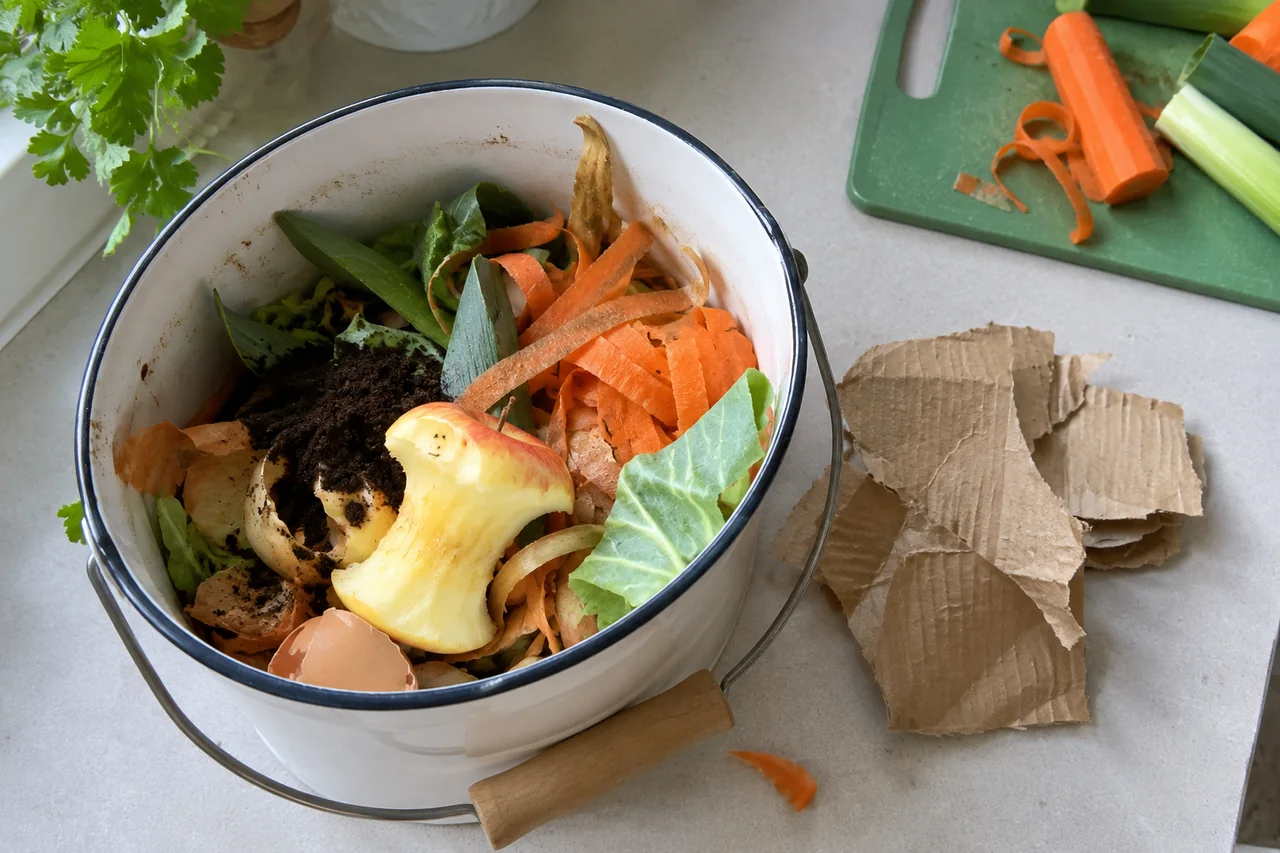
Raw fruit and vegetable scraps, spent coffee grounds and plain paper or card can go in an ordinary garden compost bin. Keep out meat, dairy and cooked meals; check tea bags, packaging and treated garden waste first.
Potato peelings are an easy yes. A tea bag needs a closer look. This guide is for an ordinary garden compost bin or heap, where the contents often break down slowly and stay fairly cool. A council food waste caddy, wormery or specialist hot composter has its own rules.
For the common uncertainties, go straight to tea bags and packaging, weed roots and diseased plants, or treated lawn clippings.
What to add
Use the table when you empty the kitchen caddy or tidy the garden. Mix ingredients as you go.
| Material | What to do |
|---|---|
| Raw fruit and vegetable scraps | Add them, mixed with drier material. |
| Spent coffee grounds and loose tea | Add them. Check bags and other packaging separately. |
| Grass clippings | Mix small additions with browns; avoid a thick, wet layer. See the weedkiller check below, or fix a matted, smelly batch. |
| Plain cardboard and paper | Tear or scrunch small amounts. Remove plastic tape and film; leave plastic-coated material out. |
| Soft prunings and young annual weeds | Add healthy material. Keep seedheads out. |
| Woody prunings | Chop or shred first. Expect them to take longer than soft scraps. |
| Autumn leaves | Some can go in. For a large autumn collection, make leaf mould separately. |
| Eggshells | They can go in. |
Ingredient guidance: Garden Organic’s materials list and composting questions.
Keep some browns beside the bin
In composting, “greens” means soft, nitrogen-rich ingredients such as peelings and grass. Coffee grounds count as greens too. “Browns” includes carbon-rich material such as cardboard and woody stems.
Garden Organic suggests roughly equal volumes as a starting point. You do not need to weigh each handful. A nearby box of torn cardboard makes it easier to mix in browns whenever you add kitchen scraps. The RHS composting guide explains how to adjust a mixture that becomes too wet or dry.
Keep some plain paper or card crumpled rather than pressed into flat sheets. Thompson’s high-fibre method uses these irregular shapes, including egg boxes and cardboard tubes, with regular soft waste.[1] Remove tape and plastic coatings first. The full method is in composting in a small garden.
Keep these out of an ordinary cool bin
Leave out meat, fish, dairy and cooked food, which can attract vermin. Keep cat litter, dog faeces and disposable nappies out too. Coal and coke ash do not belong in the mix. Garden Organic lists these exclusions in its materials guide.
A sealed hot system may accept food an ordinary bin cannot handle. Use its instructions, including any preparation steps, rather than borrowing an ingredients list from a different system.
Check these before you tip them in
Tea bags and “compostable” packaging
Check for a clear home-composting instruction. Recycle Now points to the OK compost HOME label for tea bags. If you cannot confirm the bag is suitable, split it and compost the tea separately.
A plant-based seal is not enough: Recycle Now says plant-based plastic in some tea bags still needs an industrial process to break down completely. The home-composting instruction matters even when the packet says the plastic comes from plants.
Packaging labelled for industrial composting needs a different process. Recycle Now distinguishes home and industrial compostable plastics; the word “compostable” alone is not enough. Check local collection rules before using a council caddy. Compostable plastic should stay out of plastic recycling.
The seedling logo means industrial composting. It is not the same as a home-composting label. Keep the item out of the garden bin unless its instructions specifically allow that use.
Weed roots, seedheads and diseased plants
Seeds can survive a cool heap, and persistent perennial weeds can regrow. Keep troublesome roots such as bindweed and ground elder out of this beginner mix. Do not add plants with soil-borne diseases such as clubroot or white rot. Other diseases need individual advice; if you cannot identify the problem, set the material aside and check. Garden Organic explains the exceptions.
A real account from Хозяин offers a useful reminder. In 2020, Vladimir Sikach, gardening in Nelipyno in Ukraine’s Zakarpattia region, described walnuts accidentally collected with leaves sprouting in his compost trenches.[2] His large garden and trench system differ from a small British bin, but the practical check transfers: look for seeds and fruits when sorting a batch of leaves.
Grass from a treated lawn
If weedkiller has been used, check the product label for restrictions on collecting and composting clippings. Ask a lawn-care company what it applied. Keep clippings treated with a persistent weedkiller out of council green waste: residues can survive composting and damage plants. The RHS guide to weedkiller damage explains why.
Before emptying a bag of garden waste, remove plant ties, labels and bits of plastic. If you cannot identify an ingredient or its treatment, set it aside while you check.
Sources for these details
- Ken Thompson, Compost: The Natural Way to Make Food for Your Garden, DK Publishing, 2007, pp. 66, 73–74.
- Vladimir Sikach, Передвижная компостная яма или как я облагораживал свой огород [A moving compost trench: how I improved my vegetable plot], Хозяин / hozjain.ua, 2020. Read the source.