
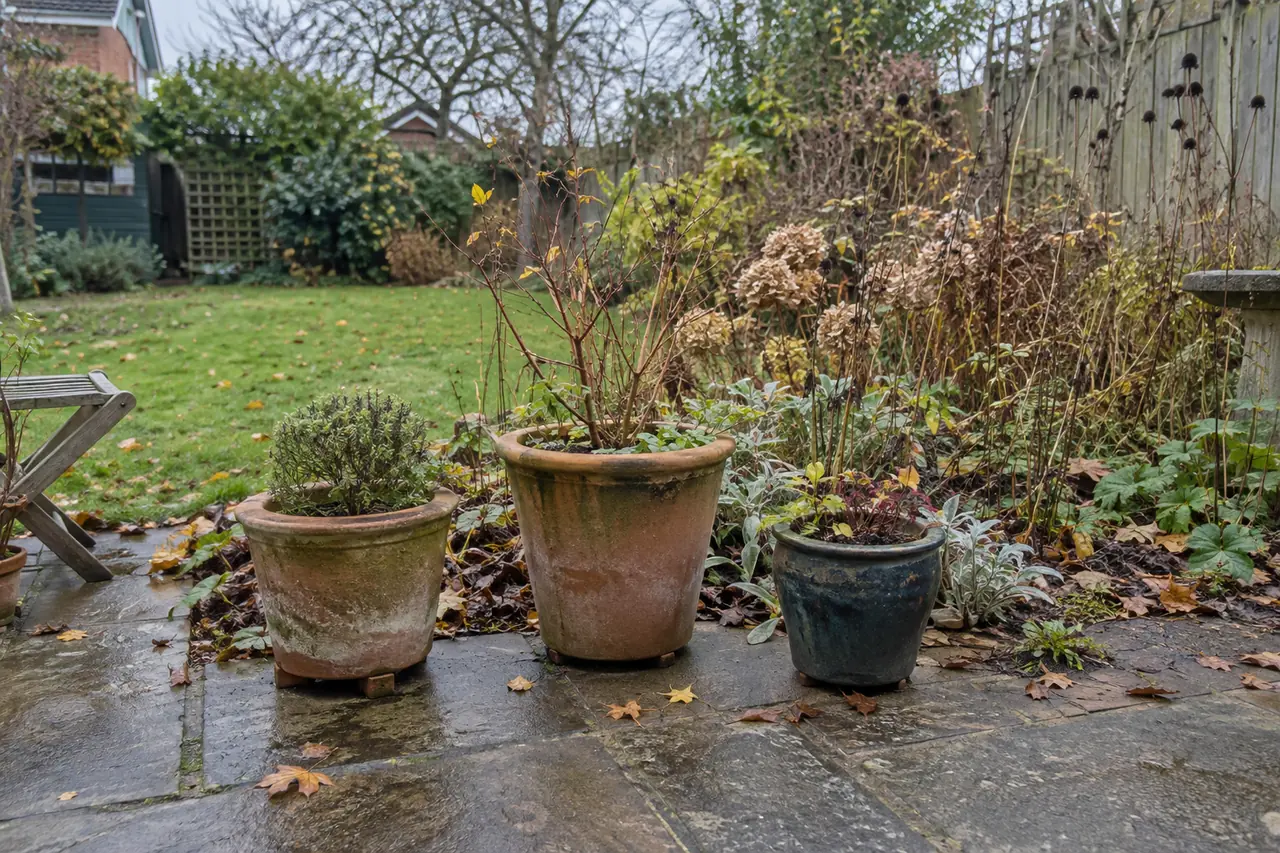
Have a bag for leaves and your labelled tulip bulbs ready for a break in the rain. Check the pots nearest the back door first: water can collect in their saucers, and anything waiting for indoor shelter is easy to overlook.
If you have twenty minutes
- Check that vulnerable pots are raised securely and their outlets remain clear. Empty collected water before it becomes the plant’s winter home.
- Check tender plants and the shelter arranged for them. Look again at anything you meant to bring in but left beside the back door; check the winter protection steps if its shelter is still unresolved.
- Collect suitable leaves for leaf mould in bags and clear access where fallen leaves make the route awkward.
A pot under shelter can still dry out. Check before watering, especially during a mild, dry spell. Use the plant’s needs to decide the action; the month alone cannot tell you whether its compost is wet.
Plant when the weather and ground permit
October’s main work was getting shelter, access and planting materials ready. Now use a suitable weather window to complete the planting. If protection is unfinished, deal with that first; a frost forecast matters more than the month’s list.
| Conditions | Useful job | Stop or next step |
|---|---|---|
| Wet day, planting space under cover | Choose one tulip variety for each pot, label it and gather the containers and compost. | Check existing outlets before adding a new display; save outdoor planting for suitable conditions. |
| Workable outdoor spell | Plant the tulip pots and finish suitable winter bedding. | Water new containers to settle them, let them drain and check the forecast before further watering. |
| Prepared fruit site; soil neither frozen nor waterlogged | Plant the fruit tree or bush chosen for your space. | If the soil fails that check, return to pot and shelter jobs; avoid trampling a wet bed. |
RHS November guidance includes planting tulips and completing winter bedding. Have the pot and labelled bulbs ready for a workable day. Keep drainage in mind rather than putting a new display into a container that already stands in water.
For a small patio, try one bulb type per pot. Monty Don suggests repeating these simple pots instead of relying on one large mixed display.[1] You can move each into view when it flowers. Choose pots deep enough for the bulbs, and use the planting guide to check the mix and depth.
For a small edible garden, this can be a time to plant fruit trees or bushes suited to the space. Wait if the ground is frozen or waterlogged. Check the eventual size, pollination needs and available room before ordering a fruit tree for a narrow plot.
Garlic and overwintering broad beans are conditional jobs. RHS advice limits outdoor garlic planting to mild areas with free-draining soil and low rainfall; it also describes starting cloves in modules in a cold frame. Outdoor broad beans suit mild areas and well-drained conditions. A cold, wet patch is a reason to change the plan, not force the planting date.
Leave useful structure standing
Keep suitable stems and seedheads that provide winter interest or wildlife shelter. Tidy what has collapsed where necessary and use advice for the particular plant before pruning. Stop treating every brown stem as an unfinished job.
Keep a list for spring
Photograph where rain pools and mark any outlet that needs clearing. Avoid working on sodden beds to finish a list. If a pot remains wet after its saucer is emptied, follow the drainage checks while the problem is visible.
Sources for these details
- Monty Don, Gardening at Longmeadow, BBC Books / Ebury Publishing, 2012, November, “Winter pots”, pp. 310–311.