
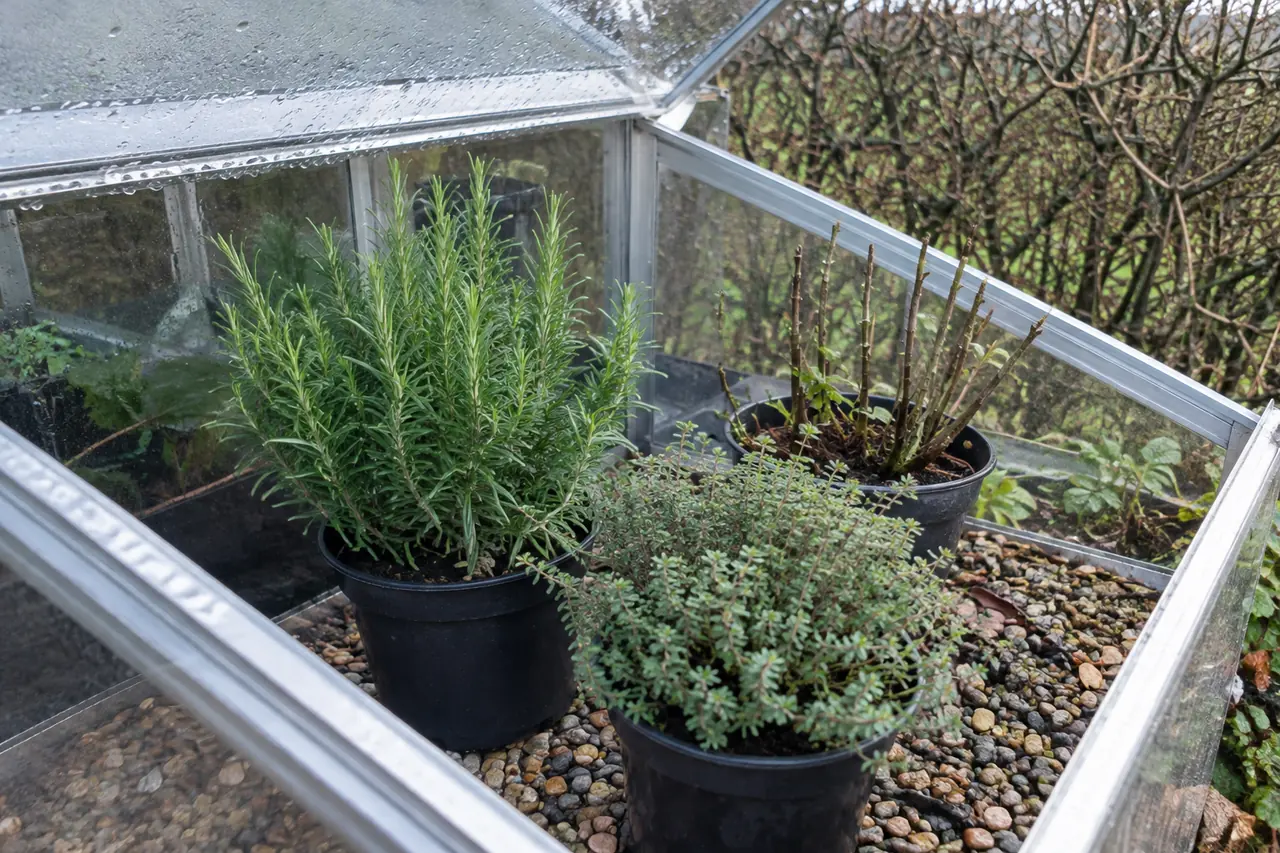
Mint can disappear above ground while thyme stays green. Basil may still look full of leaves shortly before a cold night damages it. A winter plan starts with the plant’s name, not its appearance on one afternoon. If you are choosing the plants first, begin with the small starter group of separate herb pots.
Choose the next action
| Herb | What you may see | Where and what to check |
|---|---|---|
| Mint | Stems naturally die back; roots can remain alive. | A sheltered outdoor pot can stay outside. Protect against the container freezing, saturation and prolonged drying. Label it so a bare pot is not discarded. |
| Thyme | Most culinary types retain evergreen foliage. | Sunny, sheltered, freely draining outdoor position. Check the named type’s hardiness; avoid persistent winter wet. |
| Rosemary | Evergreen leaves; harsh cold or wind can still damage shoots. | Sunny shelter from cold winds and heavy rain where possible. Insulate container roots during severe cold; assess any separate foliage cover. |
| Basil | Soft growth; very little new growth in low winter light. | Warm, bright, frost-free indoors, away from draughts. Keep roots moist without saturation and reduce picking when it is not replacing leaves. |
Rain shelter still needs a moisture check
A pot in the rain shadow of a wall can escape heavy downpours but also become dry. Check the compost rather than watering every pot on the same day. Keep drainage outlets open and avoid leaving ordinary herb pots standing in water.
Check sheltered evergreen pots at least weekly, and again after a mild dry spell; feel below the surface before deciding whether to water. Dormant mint uses less water than leafy herbs, so keep its rootball from drying out without giving it the summer routine. Water on a mild day when needed and avoid watering ahead of a forecast frost.
For rosemary, cold wet compost can cause root trouble even in a mild winter. A sheltered spot that keeps some rain off may be more useful than a thicker wrap on a saturated pot. In very cold weather, insulation around the container can help protect roots.
At Longmeadow in Herefordshire, Monty Don found that rosemary and thyme came through wet winters in his shallow, very well-drained dry border.[1] That is a border observation, not a test of potted herbs. It helps explain why we would check a rosemary pot’s outlets and drainage route and growing mix before adding another wrap. Free drainage does not remove the need for cold protection in an exposed garden.
Decide what you want from mint
Outdoor mint normally dies back and regrows in spring. If you want to keep picking through winter, RHS advice describes bringing a pot indoors in autumn to a sunny windowsill. That is an option for harvesting, not a requirement for every outdoor mint pot.
Label a dormant pot so it does not get emptied during a tidy-up. If you intend to divide a crowded clump, RHS advises spring or autumn; do it when conditions suit the job rather than pulling it apart simply because the top looks bare.
Unsure whether the job is rain shelter or insulation? Use the separate checklist for protecting pots in winter.
Be realistic about indoor basil
Give basil the brightest suitable warm place you have, away from draughts. Keep its roots moist without making them soggy, and take fewer leaves when it produces little new growth. A plant merely staying alive in January may not be able to supply a handful for pesto.
You do not need to keep a tired supermarket pot indefinitely. If it declines despite suitable care, start again when warmth and light make growing easier. For a healthy but crowded plant, try the supermarket basil division steps. Keep a note of what worked in your own window rather than expecting a year-round outdoor harvest across the UK.
Sources for these details
- Monty Don, Gardening at Longmeadow, BBC Books / Ebury Publishing, 2012, August, dry-border discussion, p. 220.